Mail-order donuts have turned into a real revenue line for bakeries that once sold only across the counter, and the packaging is what makes or breaks the business. A box that immobilizes a dozen donuts on the shelf can still let them slide, stack, and smear across three days in a delivery truck. Shipping donuts well is a packaging problem before it is a logistics problem, and it comes down to a few decisions you make once and then repeat on every order.
Start with what you are actually shipping
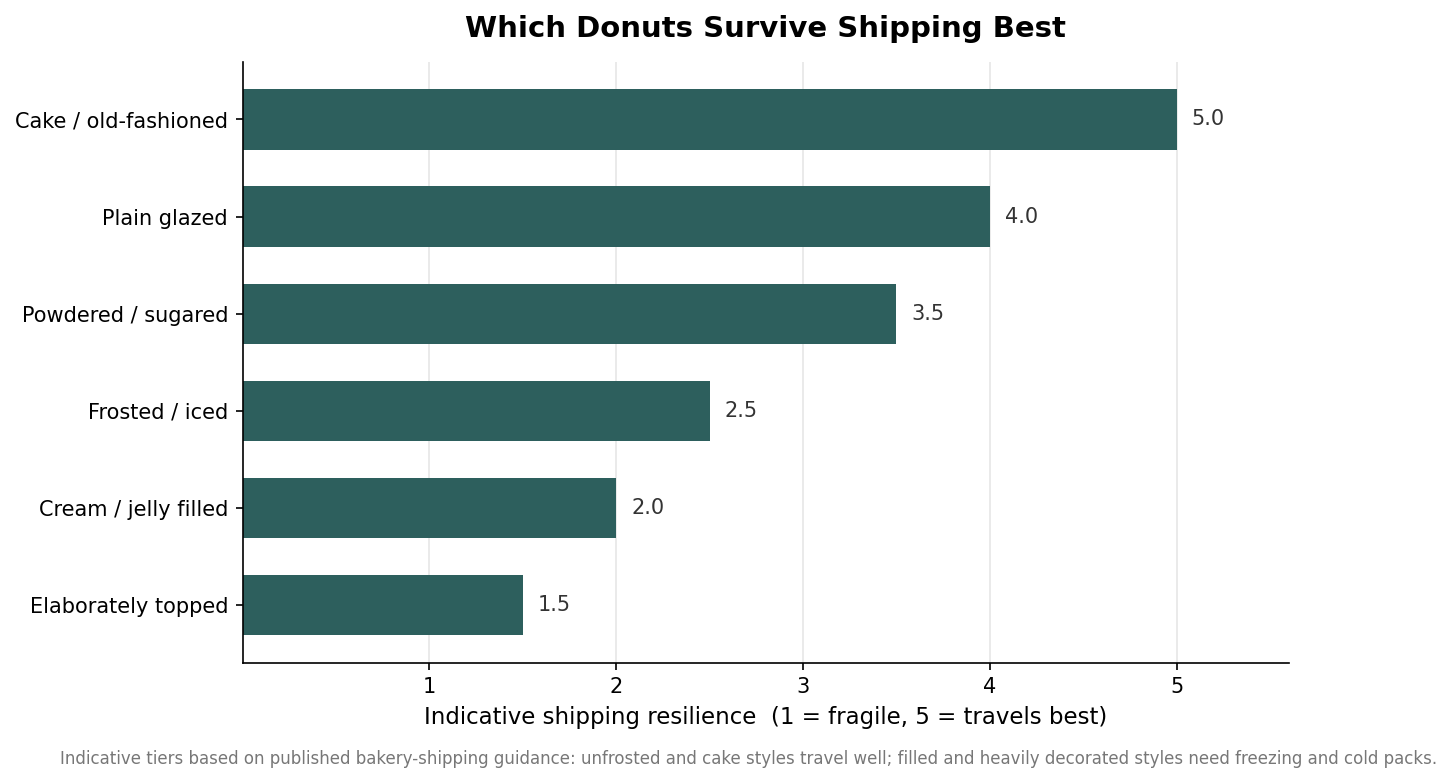
Not every donut travels the same. Cake donuts and old-fashioned styles are dense and unfrosted, so they hold their shape and shrug off a rough ride. Plain glazed and sugared donuts do well too, with the main risk being a scuffed surface rather than a crushed one. The trouble starts with frosted, iced, and cream- or jelly-filled donuts: soft toppings transfer onto whatever they touch, fillings weep, and elaborate decorations shear off the moment the box shifts. If you are building a shippable menu from scratch, lean toward the resilient end and treat the fragile styles as items that need cold packing or that you simply do not ship.
Build the box in two layers
The single most important structural rule for shipping donuts is to separate the presentation box from the shipping box. The inner box is the branded donut box the customer opens; its job is to hold each donut snugly so nothing rolls. Insert trays, individual compartments, or simple parchment dividers keep donuts from knocking into each other, and wrapping individual donuts in food-grade bags or parchment stops soft toppings from bonding to their neighbors. The outer box is a plain corrugated shipper, ideally a size up from the inner box, with the gap filled by crumpled kraft paper or bubble cushioning so the inner box cannot move. This double-box approach is the same method professional bakeries and shipping guides recommend for delicate baked goods, and it is far more forgiving than trying to make one beautiful box do both jobs. Before a box ships, give it the shake test: if you can hear or feel anything move, add fill.
Choose a board that can take the trip
A box that looks great on a bakery shelf is not automatically a box that survives a freight route. For the inner donut box, a sturdy paperboard in the range of roughly 14 to 18 point holds a printed lid and resists denting better than the thin stock used for grab-and-go singles, and a grease-resistant liner keeps oil from the donuts from softening the walls and dulling the print. If your donuts are glazed or filled, that grease barrier is doing structural work, not just cosmetic work, because a saturated box collapses under the weight of anything stacked on it. For the outer shipper, standard single-wall corrugated is enough for a single dozen, but two dozen or a heavy assortment is worth double-wall board, which roughly doubles the crush resistance for a few cents more per box. Match the inner box footprint closely to the shipper so you are filling a thin gap with cushioning rather than trying to stabilize a small box rattling around a large one.
Race the clock on freshness
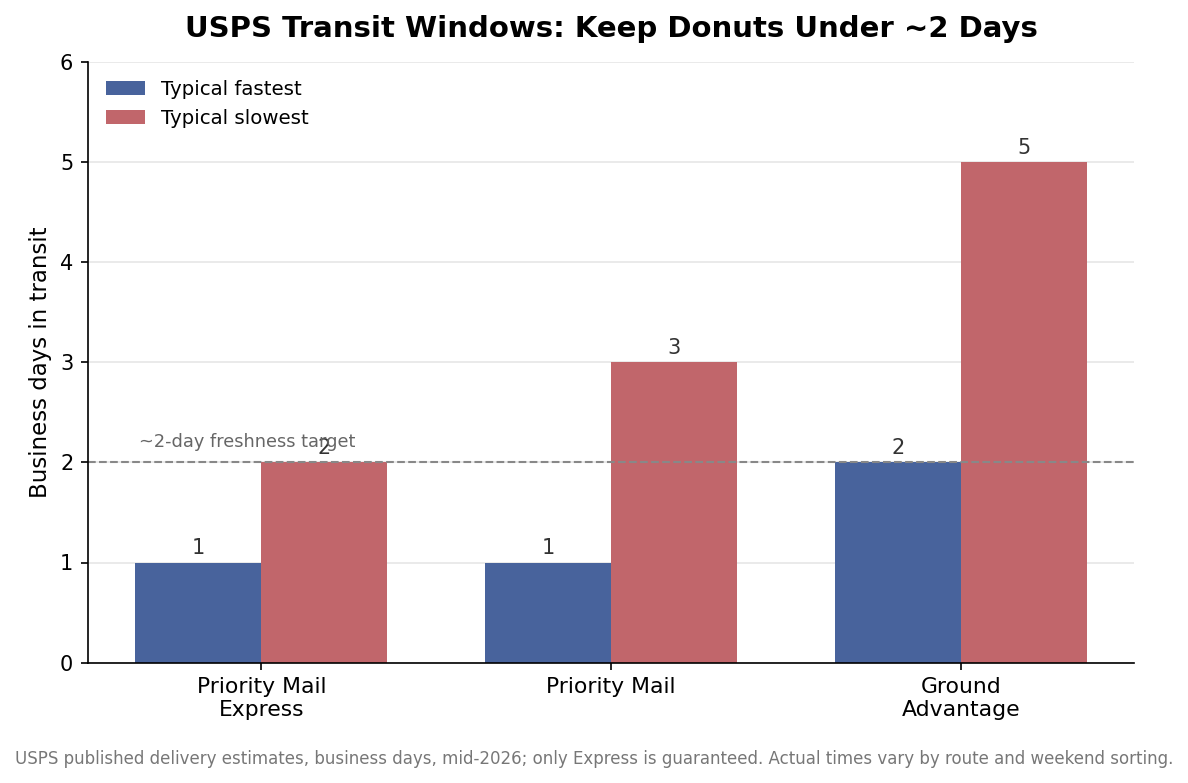
Donuts are best within a day or two of frying, so transit time is a core packaging decision, not an afterthought. Overnight or two-day service preserves quality dramatically better than economy ground, and the practical target is to have the box in the customer’s hands within about two days of it leaving your kitchen. USPS publishes delivery estimates that make the tradeoff concrete: Priority Mail Express typically lands in one to two business days and is the only tier that is guaranteed, Priority Mail generally runs one to three, and Ground Advantage can stretch to five. Shipping early in the week also matters, because a Thursday or Friday label often means the parcel sits in a sorting facility over the weekend.
Add cold only when the donut demands it
Temperature control is worth it for the fragile styles and wasted on the sturdy ones. Unfrosted cake and glazed donuts usually arrive fine with no ice at all, so adding cold packs just raises weight and cost for no benefit. For frosted, filled, or cream-based donuts going more than a day in transit, the reliable method is to freeze them solid before packing and include a cold pack, which keeps toppings set and buys time. Wrap any cold pack separately so its condensation cannot soak the donuts or the box, and remember that a wet box loses its strength fast. Cool everything to room temperature before it goes near a sealed bag, since packing a warm donut traps steam and produces exactly the sweaty, soggy surface you are trying to avoid.
Label it so it gets handled right
The cheapest protection you can add is information on the outside of the box. Mark shippers as perishable and as fragile or handle-with-care so carriers route and stack them accordingly, and note “this side up” when the arrangement depends on it. On the cost side, lightweight orders under a pound can move for only a few dollars on economy services, but for donuts the faster tier almost always earns its price by protecting a product you cannot replace once it arrives ruined. Specify the inner box, the outer shipper, the cushioning, and the service level once, document it, and every future order becomes a matter of following the same recipe rather than solving the problem again.
Leave a Reply